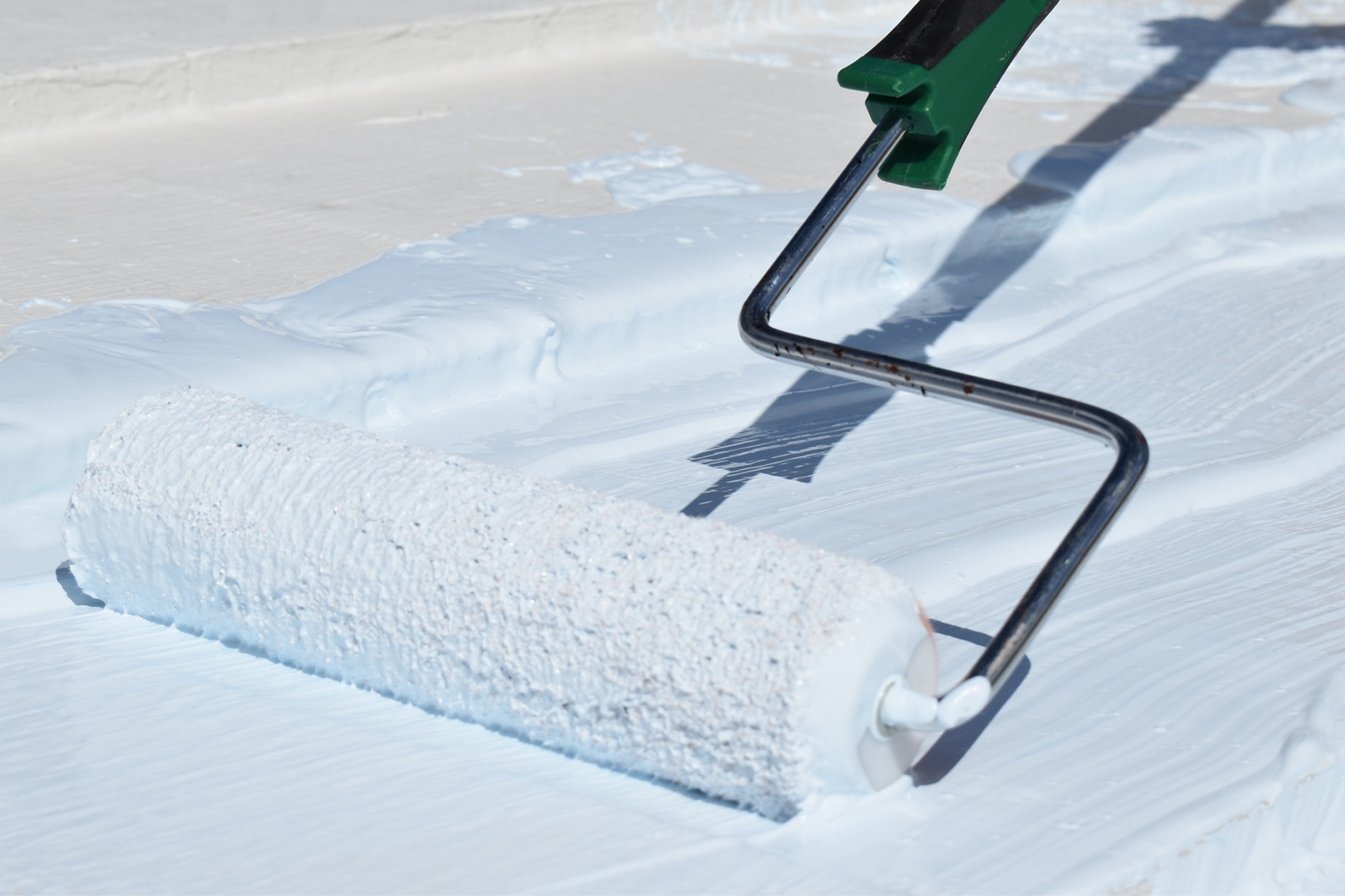
When it comes to protecting your roof, applying two coats of elastomeric roof coating isn't just a suggestion, it's a smart, performance-driven decision. Whether you're sealing a commercial flat roof or refreshing a residential surface, the two-coat system ensures durability, longevity, and the full benefits of your investment. Let's break down why a two-coat application is the industry's best practice, and what happens when you skip it:
TWO COATS. NO SHORTCUTS.
Pinholes and thin spots are common after just one coat and are access points for continued water intrusion. The second coat ensures that every inch of your roof is covered by a continuous, water-tight membrane with the appropriate thickness to deliver the flexibility and waterproofing power elastomeric roof coatings are known for.
1. Full Coverage = Full Protection
The first coat acts as a base layer. It fills pores, seals hairline cracks, and adheres to the roof surface. However, just one coat won't provide the long term waterproofing solution that you desire. Pinholes and thin spots are common after just one coat and are access points for continued water intrusion.
The second coat ensures that every inch of your roof is covered by a continuous, water-tight membrane with the appropriate thickness to deliver the flexibility and waterproofing power elastomeric roof coatings are known for.
2. Better Adhesion, Less Peeling
One coat may adhere well, but over time, UV exposure and weathering can cause it to degrade or peel, especially in high-stress areas. The second coat not only builds thickness but also protects the first layer, improving resistance to blistering, and cracking.
3. Weather-proofing
The weather during and after roof coating application matters. Wind, rain, or intense sun can affect how your coating cures. The first coat might be compromised if conditions shift. A second coat gives you insurance, a chance to reinforce and even out the surface once the first coat has fully cured.
4. Meets Manufacturer Standards & Warranty
Most professional-grade elastomeric roof coatings, including Lanco Roof Coatings, are tested and rated based on a two-coat application. Skipping that second coat often means: you did not meet the minimum membrane thickness, your warranty could be voided, and your coating won't last as long as it should.
Following the product instructions ensures you get the performance you paid for.
It's a Small Extra Step with a Big Payoff
Yes, two coats take more time. But the benefits include: fewer repairs, longer roof life, and better reflectivity. This far outweighs the cost. It's a small investment in labor that delivers years of added durability.
Lanco US Tips for Best Results
Always allow the first coat to fully dry (usually 24 hours, or as per label). Apply coats in perpendicular directions (e.g., north-south, then east-west) for better coverage. Don't "paint" your roof with the coating — "spread" the coating on your roof. This way you avoid applying layers that are too thin. Follow Lanco's product-specific guidelines for application rates and weather conditions.
The Bottom Line
Two coats is not twice the work — it is the difference between a roof that lasts and one that fails ahead of schedule. Do it right the first time.
Expert Support
Not sure which product is right for you?
Every roof is different. Our team is ready to help you select the right solution for your specific surface and conditions.